Have you ever wondered why some people stop eating certain foods? You might know someone who avoids dairy, sugar, or meat. These choices are often part of restricted diets. A diet like this means you intentionally limit or remove specific food groups from your daily meals. People use restricted diets for many different reasons. Sometimes it is to manage a health issue, and other times it is just a personal choice for their lifestyle. It is important to understand how these diets work so you can make the best choices for your own body.
Why Do People Follow Restricted Diets?
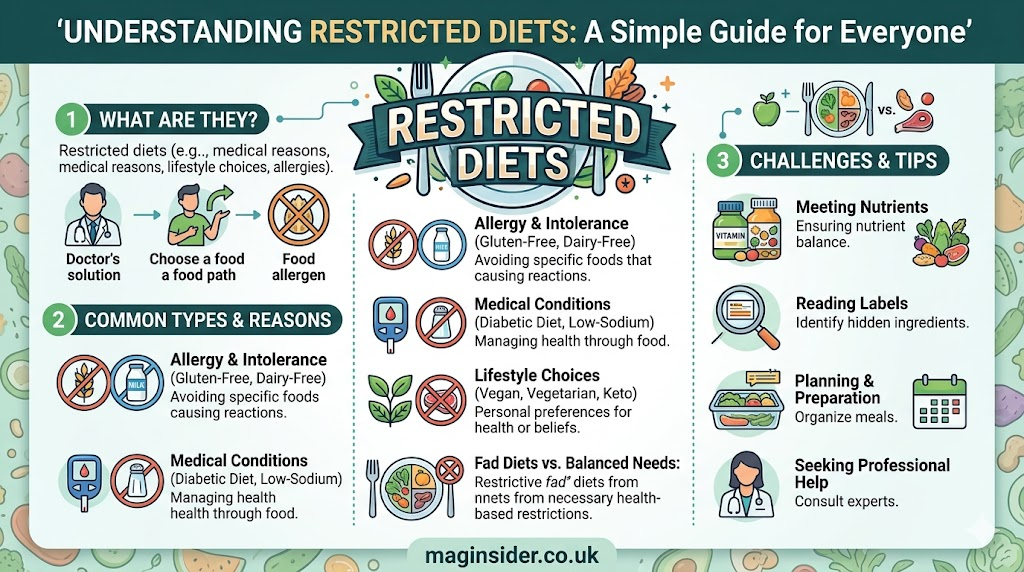
Most people start restricted diets to help their bodies feel better. If you have a food allergy, you must avoid that food to stay safe. For others, restricted diets are used to manage conditions like diabetes or heart disease. Doctors might suggest limiting salt or sugar to keep your heart and blood sugar healthy. Some people also choose these diets for religious or ethical reasons. No matter the reason, the goal of restricted diets is usually to improve your overall well-being and health.
Common Types of Restricted Diets
There are many kinds of eating plans that fit the label of restricted diets. A vegan diet removes all animal products like meat, eggs, and dairy. A gluten-free diet is used by people who cannot digest wheat. Other common restricted diets include low-sodium plans for blood pressure or low-fat plans for digestion. Some diets are even temporary, like a liquid diet before a medical test. Each of these restricted diets has specific rules about what you can and cannot eat.
The Role of Medical Supervision
If you are thinking about starting one of the restricted diets, please talk to a doctor first. Your body needs many vitamins and minerals to work well every day. When you follow restricted diets without help, you might miss out on important nutrients. A doctor or a dietitian can make sure you still get what you need to grow and stay strong. They can help you plan meals that are safe and healthy. Never start strict restricted diets without checking in with a professional who knows your health history.
Balancing Your Nutrition
One big challenge with restricted diets is finding a good balance. You might be tempted to just remove foods, but you also need to add healthy options. If you cut out meat, you should eat more beans or nuts for protein. When you follow restricted diets, try to focus on what you can eat rather than just what you avoid. This makes eating more fun and less stressful. Always try to keep your meals colorful and full of variety to keep your body happy.
Managing Dietary Restrictions Safely
To manage restricted diets safely, you must be a detective with food labels. Many processed foods have hidden ingredients that might break your diet rules. Always read the back of the package before you buy or eat something new. When you go out to eat, do not be afraid to ask your server questions. Managing restricted diets is much easier when you are prepared. Planning your meals ahead of time at home also helps you avoid mistakes and keep your energy levels high.
The Psychological Aspect of Dieting
Following restricted diets can sometimes affect your mood. Feeling like you cannot eat your favorite snacks can be hard for anyone. Some studies show that very strict restricted diets might make people feel tired or stressed. It is important to be kind to yourself. If you are struggling with the mental side of restricted diets, talk to a friend or a counselor. Remember that food is meant to fuel you, and you deserve to feel good about what you eat.
Listening to Your Body’s Cues
Your body is very good at telling you what it needs. When you are on restricted diets, pay close attention to how you feel after meals. Do you feel full and happy, or are you still hungry and tired? If restricted diets make you feel weak or sad, your body might be telling you that something is missing. Learn to notice your hunger and fullness signals. Being a mindful eater will help you find success with any of the restricted diets you might choose to follow.
Common Myths vs. Facts
There are many myths about restricted diets. Some people think they are the secret to instant health, while others think they are always bad. The truth is that restricted diets are just a tool. They are not “good” or “bad” by themselves. The best way to use restricted diets is with balance and expert advice. You do not need to follow a perfect plan to be healthy. Most of the time, simple, whole foods are the best choice for everyone.
Tips for Long-Term Success
If you decide that one of the restricted diets is right for you, make it easy to maintain. Do not try to change everything in one single day. Start with small, simple steps like swapping one unhealthy snack for a piece of fruit. Keep your goals realistic so you do not feel defeated. Restricted diets are most successful when you can stick with them for a long time. Find what works for your life, your culture, and your own personal needs.
Why Variety Still Matters
Even when you are on restricted diets, try to eat as many different foods as possible. Eating only one or two types of food can lead to health problems later on. Use your restricted diets as a chance to try new vegetables, grains, or proteins you never ate before. This keeps your meals interesting and ensures you get a wide range of vitamins. Staying curious in the kitchen is one of the best ways to enjoy any of the restricted diets you choose.
Understanding Different Dietary Needs
| Diet Type | What is Restricted? | Common Reason |
| Vegan | All animal products | Ethics or health |
| Gluten-Free | Wheat, barley, rye | Celiac disease/Intolerance |
| Low-Sodium | Salt and salty foods | High blood pressure |
| Low-Fat | Oils, butter, fatty meats | Digestion or weight goals |
| Diabetic | Sugar and simple carbs | Blood sugar management |
Frequently Asked Questions (FAQs)
1Are restricted diets safe for everyone?
Not always. You should talk to a doctor before starting restricted diets to ensure you get all your needed nutrients.
Can restricted diets help me lose weight?
They can, but they are not the only way. A balanced diet and exercise are often more sustainable than strict restricted diets.
What if I accidentally eat something restricted?
Do not worry! One mistake will not ruin your progress. Just get back to your plan at the next meal.
How do I know if I have a food intolerance?
If you feel sick after eating specific foods, keep a diary and show it to your doctor to test for allergies.
Are all restricted diets expensive?
Some specialty items are pricey, but many restricted diets can be very affordable if you stick to whole, unprocessed foods.
Can kids follow restricted diets?
Only if recommended by a doctor. Growing bodies have high nutrient needs that must be carefully managed.
Conclusion
Navigating the world of restricted diets can feel big, but you have the power to do it safely. By focusing on whole foods and listening to your doctor, you can use these tools to feel your best. Do you have a favorite healthy recipe that fits a special diet? Share it with a friend or family member today to keep the conversation going!